Live translation
When translated speech falls behind: interrupt or queue?
Choose between interrupting, preserving, or clearing a live TTS queue based on content risk, with a repeatable stress test for translated playback.
Lab Editorial3 min read
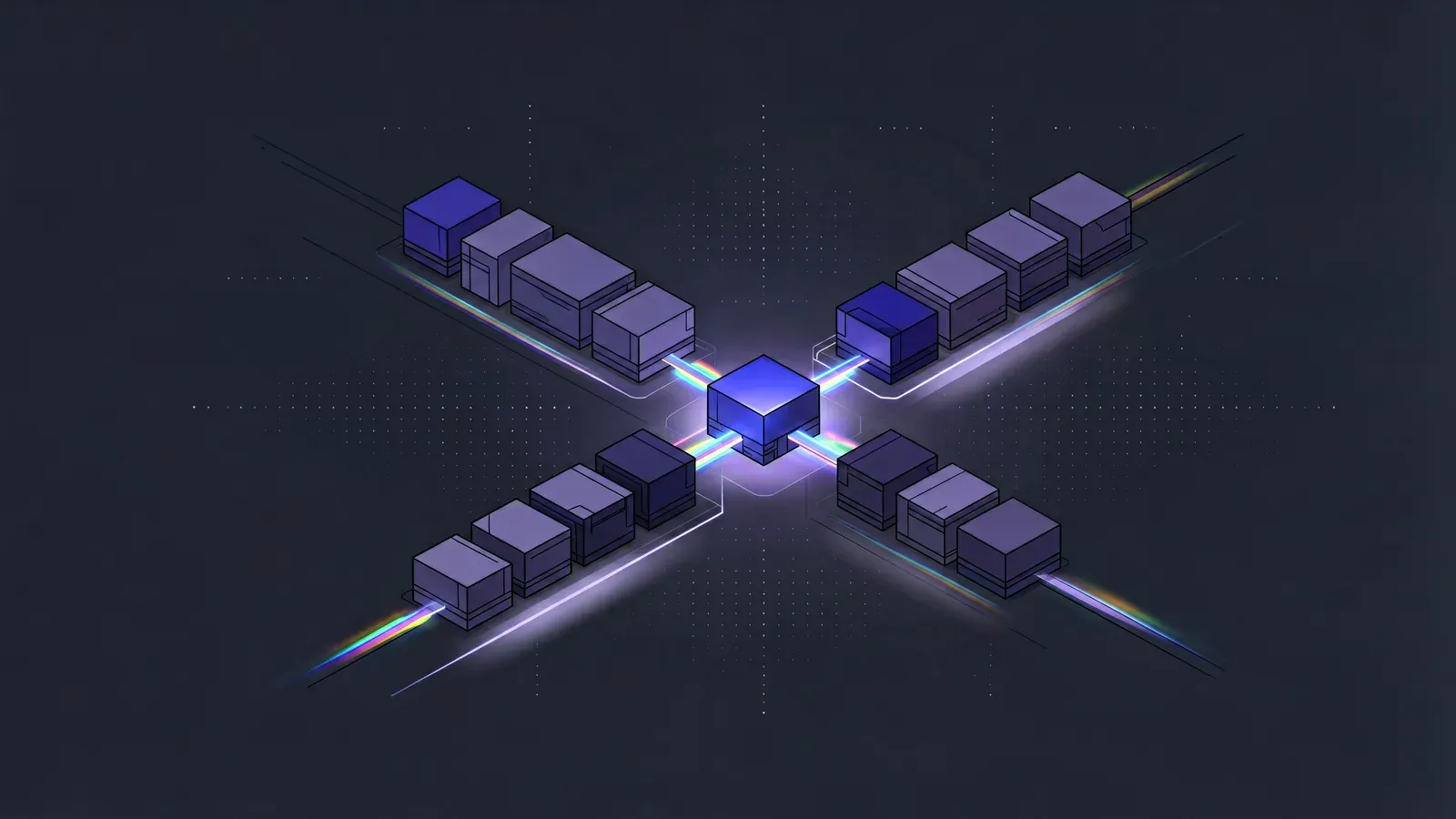
Some live-translation “latency” is simply a playback queue. Recognition and translation may be current while the audience hears speech about the previous product because three completed sentences are waiting for the speaker.
There are three responses: let new speech interrupt old speech, preserve the full queue, or stop and clear it manually. Each sacrifices different information.
Prove that the queue owns the delay
The ObsTrans workbench exposes queued items and current playback. If captions show the current product while speech describes the previous one and the queue count keeps rising, playback is the bottleneck.
If captions are also late, return to the end-to-end latency budget. Interrupting TTS cannot repair slow segmentation or recognition.
The three strategies
Interrupt with each new sentence
The benefit is recency. The cost is a missing sentence ending. This fits repetitive, visually obvious content: colour demonstrations, greetings, atmosphere, and repeated calls to action.
ObsTrans exposes an interrupt-current-playback setting. It also separates Voice translation from Playback translation and provides Stop playback, so an operator can retain captions or clear speech that has lost its value.
Preserve the entire queue
The benefit is completeness. The cost is age. When the host produces translated text faster than the target language can be spoken, backlog grows regardless of network speed.
Synthesis may finish quickly, but a loudspeaker cannot play three sentences at once. Translation into English or another target can also be longer than the source, increasing real playback time.
Keep captions and suspend speech
During a dense segment, disabling translated playback while retaining captions can be safer than attaching old prices to a new product. It reduces access for viewers not looking at the screen, but avoids a misleading audio-picture mismatch.
Classify content by the cost of truncation
Tail can be lost: greetings, repeated descriptions, visual colour or movement, and redundant calls to action.
Tail cannot be lost: price, discount conditions, stock, shipping, returns, safety, and ordered steps.
Do not ask a queue policy to protect the second category. Rewrite it. Instead of one sentence containing discount, exclusions, and gift limits, use three short sentences and pause after each. This follows the same principle as localizing the source script: make input translatable before blaming the model.
Run a controlled stress test
Prepare six utterances:
- two consecutive product descriptions;
- one price;
- one conditional offer;
- a transition to a new product;
- a correction.
Deliver them at production pace with interruption on, then off. Record peak queue size, whether old-product speech crosses into the new shot, and whether any critical condition is cut. “It felt faster” is not a result.
For the preserved queue, run as long as a normal uninterrupted sales segment. Reaching zero eventually is not success if the audience spends most of the segment hearing stale speech.
Voice and speed do not remove the decision
A cloned voice can support identity without reducing queue depth. Raising TTS speed can shorten playback, but there is no universal safe rate for intelligibility. Increase modestly and have a native listener check prices, models, and negation.
Use the cloned-voice decision guide to decide whether voice continuity is worth the playback constraint. Caption-first operation can be a deliberate product choice.
Put one rule beside the console
When the queue continues growing and the picture has moved to a new product, stop stale playback and repeat any critical condition as a short sentence. The tool supplies controls and state; the team supplies the rule for using them.
Frequently asked questions
- Does interruption lose content?
- Yes. A new translated sentence can stop the ending of the one currently playing. The benefit is hearing speech closer to the current picture, so interruption should be content-dependent.
- Why does the queue grow with interruption off?
- New translations can arrive faster than speech can be played. Shorten source sentences, reduce delivery density, test a modest TTS speed change, or leave deliberate gaps.
- Which content should never rely on interruption?
- Prices, inventory conditions, returns, safety statements, and ordered instructions. Rewrite them as short independent phrases and pause until playback completes.
KeywordsTTS queue backloginterrupt translated speechlive translation playbackspeech translation latencyObsTrans playback